
Hi, I’m Luis Mendoza. With over 12 years of experience fixing and improving homes, I know that one of the first questions on any homeowner's mind is, "What's this going to cost?" It’s a fair question, and when it comes to something as important as making your home safer, you deserve a straightforward answer. My goal here is to give you a clear, honest look at the costs associated with bathroom safety upgrades, particularly grab bar installation, so you can budget wisely and make confident decisions for your home and family.
As we move past the late fire season here in Stockton and start thinking about the first rains, it’s the perfect time to address indoor safety. Wet floors increase the risk of slips and falls, and a secure grab bar can make all the difference. Let's break down what you can expect.
Average Costs in Stockton
In my experience working in homes across the area, the grab bar installation cost can vary, but I can provide some realistic ranges to help you plan. The final price often depends on the complexity of the job.
Here’s a general breakdown of bathroom grab bars handyman pricing in our area:
- Single, Standard Installation: For a single grab bar (typically 18-24 inches) installed directly into wall studs through drywall, you can expect to pay between $125 and $225. This price usually includes the labor and standard mounting hardware, but not always the grab bar itself.
- Multiple Bar Package: Homeowners often need more than one bar. Installing two or three bars in the same visit is more efficient. For a package of three bars - perhaps one by the toilet and two in the shower/tub area - the cost might range from $275 to $450, bringing the per-bar installation cost down.
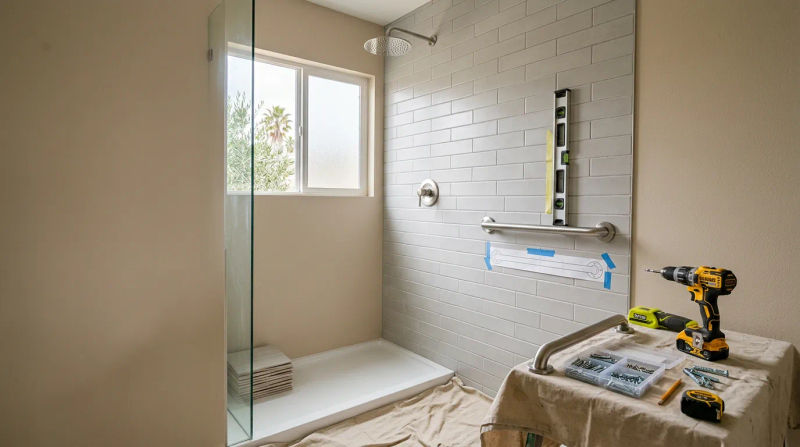
- Installation on Tile or Fiberglass: This is where things get more specialized. Drilling through tile or a fiberglass shower surround requires specific diamond-tipped drill bits and a careful, steady hand to avoid cracking. Because of the increased risk and time, the labor cost to install grab bars near shower on these surfaces is higher, often adding $50 to $100 per bar to the standard installation price.
It's also common to bundle other safety features. A complete package of Stockton senior bathroom safety upgrades cost could include installing a handheld showerhead ($100-$175), a new comfort-height toilet ($250-$400+), or anti-slip tub treatments. Combining these jobs is the most cost-effective approach.
Factors That Affect Price
Several key factors determine your final bill. Understanding them will help you see why one quote might be different from another.
- Wall Material: As mentioned, drywall is the simplest. Tile, porcelain, and natural stone are the most complex and time-consuming, as they require precision to prevent costly damage. Fiberglass and acrylic surrounds fall somewhere in the middle.
- Wall Structure and Home Age: This is a big one, especially in Stockton, where we have many beautiful single-story Ranch homes from the 1950s. These homes were built to last, but their wall framing wasn't designed with modern accessibility in mind. Sometimes, the ideal, safest spot for a grab bar doesn't have a wooden stud behind it. In these cases, we have two options:
- Specialty Anchors: Using heavy-duty hollow-wall anchors (like WingIts or toggle bolts) is a secure solution when studs aren't available. This adds a bit to the material and labor cost.
- Adding Blocking: For ultimate security, especially for individuals who will rely heavily on the bar for support, the best method is to open a small section of the wall and install a horizontal piece of wood (a "block") between the studs. This provides a solid wood anchor. However, this turns a simple installation into a multi-step project involving drywall cutting, patching, texturing, and painting, which significantly increases the cost.
- The Grab Bars Themselves: The cost of the actual grab bar can range from $20 for a basic stainless steel model to over $100 for a designer finish like matte black or oil-rubbed bronze with decorative flanges. You can often save money by purchasing the bars yourself, but I always recommend consulting with your handyman first to ensure you get the right length and type.
- Handyman's Experience and Credentials: A seasoned professional who is licensed, insured, and guarantees their work may charge more than a casual helper. In my opinion, for a safety feature like this, paying a little extra for the peace of mind that comes from a secure, professional installation is well worth it. You’re not just paying for labor; you’re paying for expertise and liability protection.
How to Get the Best Value
Being on a budget doesn't mean you have to compromise on safety. Here are my top tips for getting the most value from your handyman service:
- Bundle Your To-Do List: Most handymen have a minimum service charge to cover travel and time. If you only have one small job, you're paying a premium. Make a list of all the little things you need done - a sticky lock, a dripping faucet, a loose cabinet hinge - and have them all addressed in one visit. This maximizes the value of every hour you're paying for.
- Plan Ahead: Before my team or I arrive, know exactly where you want the grab bars. A good way to test this is to stand in the shower or next to the toilet and mimic the motion of using a bar. Mark the desired height and angle with a piece of painter's tape. This saves us time on-site, which saves you money.
- Communicate Clearly: When you call for an estimate, be as descriptive as possible. Tell us what the wall is made of (drywall or tile?), and if possible, use a stud finder to see if there are studs in the desired locations. The more information we have, the more accurate your initial quote will be.
- Choose Standard Materials: Unless you're matching specific high-end fixtures, a simple, durable stainless steel or chrome grab bar is perfectly functional, safe, and cost-effective.
Questions to Ask Your Contractor
Before you hire someone, you should feel completely confident in their ability. Here are some questions I encourage all my clients to ask:
- Are you licensed and insured? This is non-negotiable. It protects you and your property.
- Do you have experience installing grab bars on [my wall type]? Ask specifically about tile or fiberglass if that's what you have.
- How will you ensure the bar is secure? What anchors will you use if there's no stud? A pro should be able to explain their method clearly (e.g., "I'll use a stud finder, and if there's no stud, I recommend a heavy-duty toggle anchor rated for 300 lbs.").
- Does your estimate include the cost of the grab bars or just labor?
- Do you guarantee your work? A professional handyman should stand by their installation.
- Will you provide a written quote? This prevents any surprises on the final bill.
Investing in bathroom safety is one of the smartest improvements you can make to your home, enhancing independence and providing peace of mind for the whole family. By understanding the costs and factors involved, you can plan effectively and find a skilled professional to do the job right.
For a personalized estimate here in Stockton, my team at Xpro Handyman Services and I are happy to provide a free consultation to assess your needs and give you a detailed quote.