
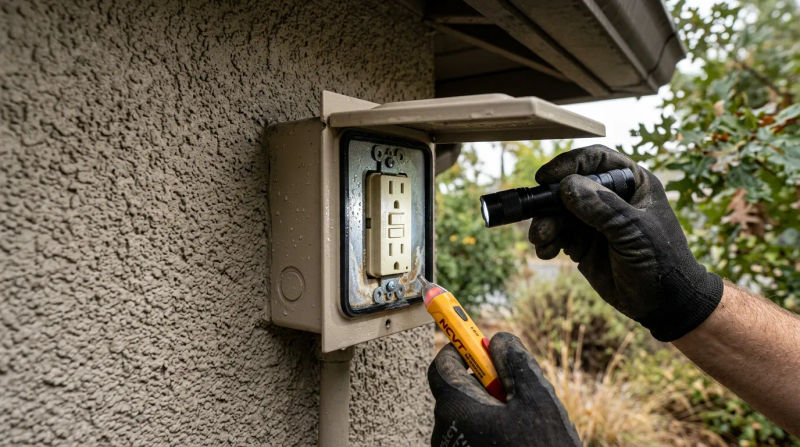
It’s a familiar scene for many of us. You’re getting your morning started, you plug in the coffee maker, and click - the power to your kitchen counter suddenly dies. Or maybe it’s that outdoor outlet on the patio that goes out every time there’s a heavy morning dew or one of those first autumn showers. When you go to check, you find the little “RESET” button on the outlet has popped out again. That’s your Ground Fault Circuit Interrupter (GFCI) outlet doing its job, but when it happens repeatedly, it’s more than just an annoyance; it’s a signal that something isn’t right.
As a handyman who has worked in homes across the Sacramento area for over a decade, I’ve seen this issue countless times, especially here in Florin. As September ushers in cooler temperatures, we start using more indoor appliances. At the same time, the shift from our long, dry summer to the first rains can introduce moisture where it doesn’t belong. This combination makes a GFCI outlet tripping a very common call my team and I receive this time of year.
Common Signs and Symptoms
First, let's identify what you might be experiencing. A tripping GFCI isn't always straightforward, and the signs can vary. Understanding them is the first step toward figuring out the cause.
- The Obvious Trip: The most common sign is a complete loss of power at the outlet. You'll notice the small “TEST” and “RESET” buttons between the sockets. When it trips, the “RESET” button will pop out. Pressing it back in should restore power, but if the problem persists, it will just trip again.
- Nuisance Tripping: This is when the outlet seems to trip for no reason at all. One minute it’s working fine, the next it’s off. This intermittent issue can be one of the most frustrating problems to diagnose.
- Tripping with a Specific Appliance: If your GFCI only trips when you plug in your toaster or a power tool, you’ve likely found your culprit. The issue probably lies with the appliance itself, not the outlet.
- An Outlet That Trips After Rain: This is a huge indicator, particularly for outlets located on exterior walls, in garages, or on patios. If your outlet trips after rain or even when you run the sprinklers, it’s a clear sign that moisture is getting into the electrical box.
- A Whole Section of a Room Goes Dead: Did you know one GFCI outlet can protect other standard outlets connected to it on the same circuit? This is called being “downstream.” So, if your bathroom vanity lights and another outlet go dead, the problem may be a single GFCI outlet located nearby that needs to be reset or inspected.
What Causes This Problem
A GFCI is a sensitive safety device designed to shut off power in milliseconds if it detects an imbalance in the electrical current, which could indicate a dangerous ground fault. When a GFCI keeps tripping Florin homeowners often find it’s due to one of these seven common reasons.
- Moisture Intrusion: This is the number one cause I see for exterior and garage outlets. Water and electricity are a dangerous mix. Rain, humidity, or condensation can get inside the outlet box, creating a path for electricity to leak to the ground and triggering the GFCI. In-use weather-protective covers are essential for any outdoor outlet.
- A True Ground Fault: This is what the GFCI is designed to detect. It means electricity is escaping the intended circuit and flowing to the ground, often through a person or an appliance's metal casing. This is a serious safety hazard, and the GFCI is your first line of defense.
- Overloaded Circuit: Technically, a standard circuit breaker in your main panel is designed to trip from an overload (drawing too much power). However, a heavily loaded circuit can sometimes cause fluctuations that a sensitive GFCI might interpret as a fault, causing it to trip.
- Worn-Out GFCI Outlet: These devices don't last forever. Their internal components can wear out after about 10-15 years. Many homes in Florin, especially the classic 1950s Ranch-style houses, may have had GFCIs installed during remodels in the 90s or early 2000s. An old, weak GFCI can become overly sensitive and trip without a real fault present. It may simply be at the end of its life.
- A Faulty Appliance: The problem might not be your wiring at all. An appliance with a frayed cord, internal moisture, or a failing motor can create a ground fault the moment it's plugged in or turned on. This is a common culprit for kitchen and bathroom GFCI issues.
- Wiring Issues Within the Walls: This is where the age of a home can play a role. The wiring in some of Florin's mid-century homes might be original. Over decades, insulation can become brittle, connections can loosen, or a stray screw from hanging a picture could have nicked a wire. Dust and debris, especially after a long, dry summer, can also accumulate in the outlet box and contribute to a fault.
- Shared Neutral Wire: This is a more technical wiring problem that sometimes occurs in older homes. If two circuits improperly share a single neutral wire, a GFCI on one of them can detect an imbalance and trip. This is not a DIY fix and requires a professional to trace the wiring and correct it.
When to Call a Professional
Before you pick up the phone, there is a simple diagnostic you can perform. Here are the reset GFCI outlet steps to follow safely:
- First, unplug every single appliance from the GFCI outlet and any other outlets that may be on the same circuit.
- Firmly press the “RESET” button. You should hear a click, and the button should stay in.
- If it stays reset, plug in a small, simple device you know works, like a lamp, to test it. If it holds, the problem is likely one of the other appliances you unplugged.
- If the outlet trips immediately with nothing plugged in, or if the “RESET” button won’t stay in, the problem is with the outlet or the circuit wiring itself.
It’s time to call for help if you encounter any of the following:
- The outlet will not reset, even with everything unplugged.
- You see any blackening or scorch marks around the outlet, or you smell burning plastic.
- The GFCI trips consistently, especially when it rains or the air is damp.
- You suspect the issue is with the house wiring, not an appliance.
- You are not comfortable or experienced with electrical work. Your safety is the top priority.
An experienced professional can quickly and safely determine the root cause. We have the tools to test the outlet's integrity, check for faults in the wiring, and ensure the entire circuit is safe.
Conclusion
A GFCI outlet that keeps tripping is a warning sign that shouldn't be ignored. While it’s doing its job to protect you, the underlying cause - whether it’s moisture, a faulty appliance, or an old, worn-out device - needs to be addressed. Simply resetting it over and over is not a solution and could mask a more serious hazard.
By understanding the potential causes, you can take simple steps to troubleshoot the issue. But when in doubt, especially with something as critical as your home’s electrical system, turning to a professional is the wisest and safest choice.
If you notice any of these signs, contact a local handyman service for an inspection.