
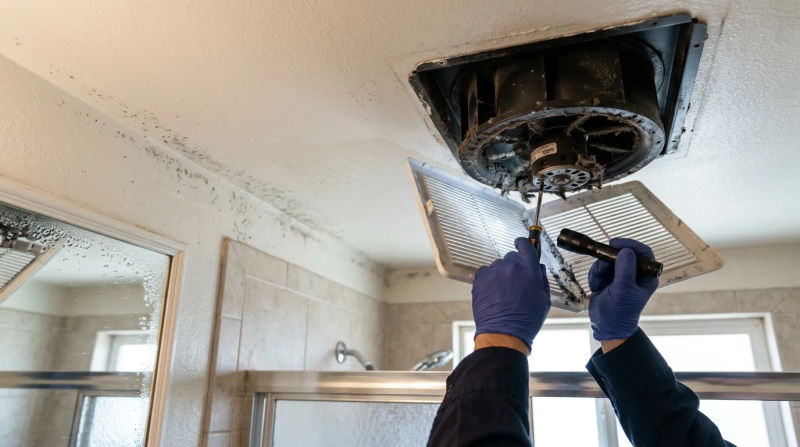
You step out of a hot shower, ready to start your day, but the bathroom mirror is a wall of fog. You open the door to let the steam out, but an hour later, the room still feels damp, and you can see condensation clinging to the windows and walls. If this sounds familiar, you're not alone. As a handyman who has worked in homes around this area for over a decade, I see this issue all the time, especially in late summer and early fall.
Here in Fairfield, when late fire season hits, we all tend to keep our windows shut tight against the smoke and heat. While that’s great for our indoor air quality, it means that the moisture from our showers has nowhere to go. This is when your bathroom exhaust fan goes from a minor convenience to your home's first line of defense against moisture damage. If humidity lingers after a shower, it's a clear signal that this small but mighty appliance isn't doing its job, and the consequences can be more than just a foggy mirror.
Common Signs and Symptoms
Recognizing the early warning signs of a failing bathroom fan can save you from costly repairs down the road. It’s not always a dramatic breakdown; sometimes, the signs are subtle. Here’s what my team and I tell homeowners to look out for.
- Persistent Condensation: This is the number one indicator. If your mirror, windows, and walls are still wet 20-30 minutes after you’ve showered, your fan isn’t moving enough air. The moisture is just settling instead of being vented outside.
- Visible Mold or Mildew: See those small black or dark green specks appearing on the ceiling (especially in the corners) or along the grout lines of your tile? That’s mold. It thrives in damp, stagnant environments, and its presence is a sure sign your fan has been underperforming for a while.
- Peeling Paint or Wallpaper: Excess moisture can work its way under the surface of your walls. This leads to paint bubbling, blistering, and peeling. You might also notice your wallpaper starting to lift at the seams. This is a direct result of the wall materials absorbing too much water.
- Loud or Strange Noises: Is your fan making a grinding, rattling, or high-pitched whining sound? While no fan is perfectly silent, these are not normal operating noises. This is one of the most common bathroom fan problems and often points to a worn-out motor or a loose component. Ignoring it won't make it go away; it usually just gets louder before it fails completely.
- The Fan Doesn't Work at All: This one is obvious, but the cause might not be. It could be a dead motor, a faulty wall switch, or a wiring issue within the ceiling. Don't assume the entire unit is a lost cause, but it definitely needs attention.
- It Fails the "Tissue Test": This is a simple diagnostic I use all the time. Turn the fan on and hold a single square of toilet tissue up to the grille. A properly working fan should have enough suction to grab the tissue and hold it firmly in place. If it flutters or falls off, your fan's airflow is too weak to be effective.
- It's an Old, Original Fan: Many beautiful homes in Fairfield are classic examples of mid-century suburban development, with a lot of single-story Ranch-style houses built in the 1950s and 60s. If your home is from this era and the fan looks original, it's almost certainly undersized and underpowered by today's standards. Those old units just can't move the amount of air needed to properly ventilate a modern bathroom.
What Causes This Problem
Understanding why your fan is failing can help you decide on the best course of action. It's usually one of a few common culprits.
- A Worn-Out Motor: Like any mechanical part, the motor in your exhaust fan has a finite lifespan. Over years of use, the bearings wear down, leading to the grinding noises many people complain about. Eventually, it will seize up and stop working entirely. This is the most frequent cause of failure I see.
- Clogged Ductwork or Vent: The fan pulls moisture-laden air through a duct that leads to the outside of your home. Over time, this duct can become clogged with lint, dust, and debris. I've also seen bird nests and other pest-related blockages in the exterior vent flap, which completely chokes off airflow. A fan can be running at full speed, but if the duct is blocked, it's not doing anything.
- Improper Installation: Unfortunately, not all fans are installed correctly. A common and serious mistake is venting the fan directly into the attic instead of all the way to the exterior. This just moves the moisture problem from your bathroom to your attic, where it can cause wood rot, insulation damage, and major mold growth. Other issues include duct runs that are too long or have too many sharp bends, which drastically reduces the fan's effectiveness.
- An Undersized Fan (Low CFM): Fan power is measured in CFM, or Cubic Feet per Minute. This rating tells you how much air the fan can move. A small, builder-grade fan with a low CFM rating (e.g., 50 CFM) is simply not powerful enough for a medium or large bathroom, especially one with a frequently used shower. A professional can calculate the appropriate CFM for your specific room size to ensure proper ventilation.
When to Call a Professional
Some minor fan issues can be handled by a handy homeowner, but many require the tools and expertise of an experienced professional to ensure the job is done safely and correctly.
Good DIY First Steps:
- Clean the Grille: Before you do anything else, turn the power off at the circuit breaker. Then, you can usually pull the plastic grille down and give it a good cleaning with soap and water. Use a vacuum with a brush attachment to clear away any dust and lint you can see on the fan blades and housing. Sometimes, this simple cleaning is a great noisy bathroom fan fix if the sound was caused by debris hitting the blades.
- Perform the Tissue Test: As mentioned above, this quick test gives you an immediate sense of whether your fan has a suction problem.
When to Call for Professional Help:
- For Any Electrical Work: If you suspect a bad switch or if the fan needs to be replaced, it's time to call for help. Dealing with electrical wiring can be dangerous if you're not trained, and a professional will ensure it's done to code.
- When You Hear Grinding or Squealing: These noises almost always mean the motor is failing. While it's sometimes possible to replace just the motor, it's often more practical and cost-effective to opt for a full bathroom fan replacement. Fairfield homes can benefit greatly from modern, ultra-quiet models that are far more efficient.
- If You Suspect a Ducting Issue: If the fan seems to be running but no air is moving, the problem is likely in the ductwork. An experienced handyman can inspect the duct line, clear any blockages, and ensure it's properly vented to the outside, not into your attic space.
- When Upgrading an Old Fan: Replacing an old, noisy unit with a modern, quiet, and properly sized one is one of the best small upgrades you can make to your home. A professional can recommend the right fan for your bathroom's square footage and handle the installation, including any necessary drywall modifications, for a clean and seamless finish.
Conclusion
Your bathroom fan is a critical part of your home's ventilation system, working silently to protect your walls, ceiling, and air quality from the damaging effects of excess humidity. Don't ignore the warning signs of a failing unit. Lingering steam, strange noises, and peeling paint are not just annoyances; they are calls to action.
Addressing these bathroom fan problems early is always the best approach. A simple repair or a modern replacement today can prevent a much larger and more expensive problem involving mold remediation and structural repairs tomorrow. Taking care of your home means paying attention to the little things before they become big things.
If you notice any of these signs, contact a local Handyman professional for an inspection.